Taylor Swift has long been known for fiercely protecting her brand, image and music and now she appears to be testing whether trademark (TM) law can help her control third-party generated AI versions of herself. On April 24, 2026, Swift’s company, TAS Rights Management, filed three trademark applications with the U.S. Patent and Trademark Office (USPTO) covering her voice and her image, a move that is likely a direct response to the explosion of AI-generated deepfakes using her identity.
AI tools have made it alarmingly easy to generate convincing audio and video of celebrities saying or doing things they never said or did. Musicians, actors, and other public figures have found their voices and images used in unauthorized ads, political content, and explicit material with little legal recourse. In 2025, sexually explicit AI-generated images of Swift surfaced and were circulated widely online. Existing protections, most notably state-level “right of publicity” laws, offer some protections for celebrities, but they vary widely by state, and bringing an enforcement action is cumbersome and potentially very costly.
Trademark law traditionally protects brand names, logos, and slogans against a “likelihood of confusion” with other marks, and also against “dilution” of a famous mark’s distinctiveness. “Image” trademarks have historically been used to protect logos, brand silhouettes, and commercial symbols (e.g. the Michael Jordan “Air Jordan” logo), and not a real person’s appearance. Sound marks, a lesser-known and relatively rare category of trademark protection, have been used to protect sounds that function as brand identifiers, like NBC’s signature chimes, which are tied to a company and its goods or services. A “sound” trademark also covers specific phrases delivered in a specific voice (e.g. Homer Simpson’s “D’Oh!”); it does not automatically extend to protecting that person’s voice in general.
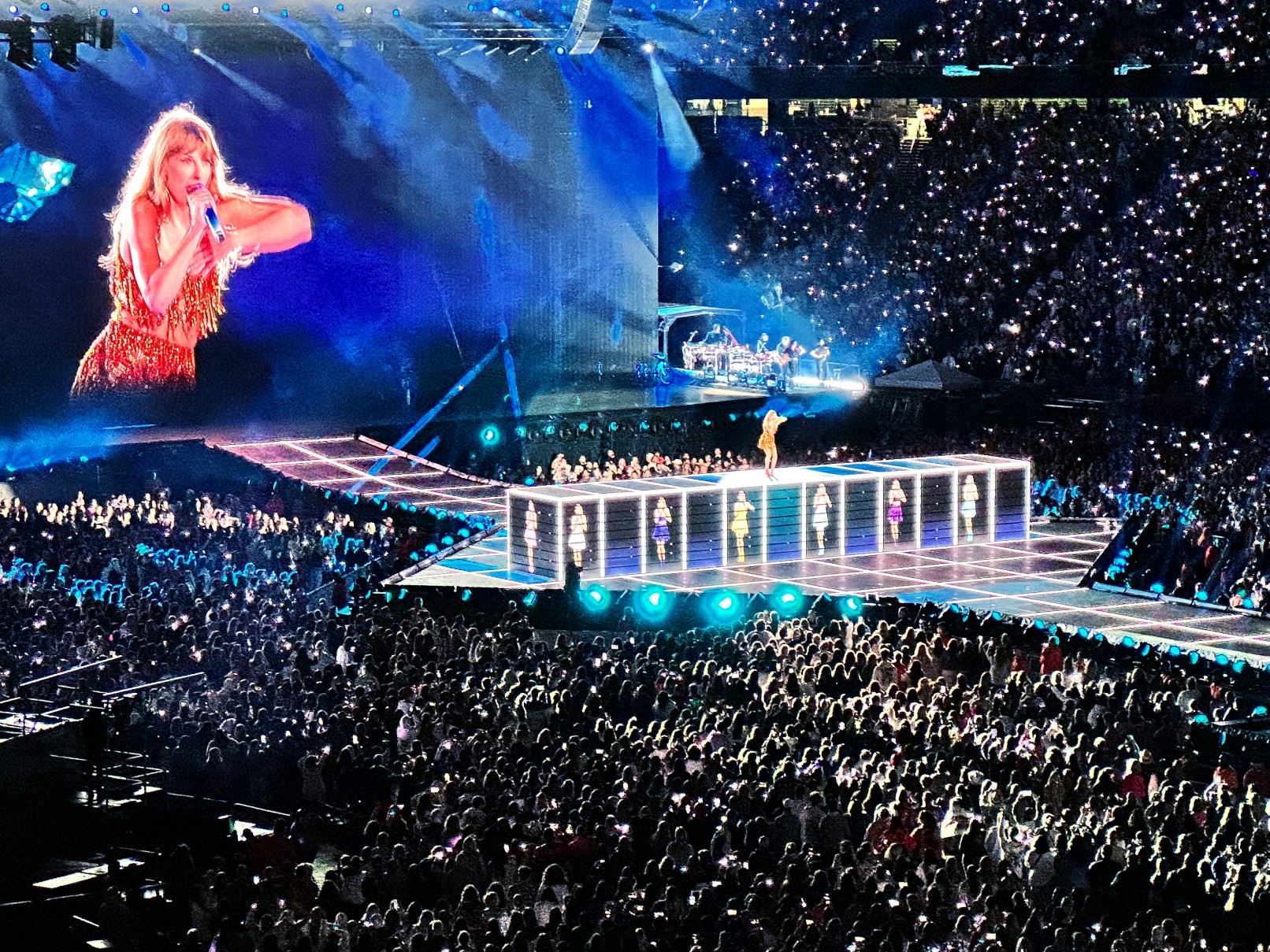
Two of Swift’s filings cover sound marks. Specifically, Swift is seeking to trademark her voice speaking the phrases, “Hey, it’s Taylor Swift” and “Hey, it’s Taylor.” The third filing protects a specific stage image of Swift holding a pink guitar during a concert. While Swift might be able to challenge an AI system that reproduces something that sounds like “Hey, it’s Taylor Swift,” whether trademark law can police broader AI impersonations of her voice is a harder question that has not been addressed by the courts. The same logic applies to her image filing. Trademarking a particular photograph tied to a specific stage look is not the same as owning trademark rights over her face or general appearance, which are traditionally not protected by trademark law.
Before any of these questions are addressed by a court, there is a more immediate hurdle. To register a trademark, an applicant must show “use in commerce,” meaning the mark is actually being used to identify and distinguish goods or services in the marketplace. It is not clear that Swift’s spoken phrases or her concert image, as she has used them, satisfy that strict legal requirement. If a USPTO examining attorney concludes that they do not, the registrations may not be granted at all.
Many people reading and writing about these filings wrongly assume that Swift can now stop anyone from using her name, image, or likeness under trademark law, but that remains to be seen. Trademark law and publicity rights are distinct legal concepts, and courts have not yet had the chance to decide how these filings may be used to protect a celebrity’s name, image, or likeness under trademark law. What these filings do represent, however, is that Swift and her legal team are clearly testing and building a framework that could give her additional tools to challenge AI misuse when it arises. Whether those tools prove effective, and in what circumstances, is a question that is still to be decided by the courts.
If you have any questions regarding trademark law, rights of publicity, AI and/or deepfakes, please reach out to us at info@sharmalawpllc.com.