
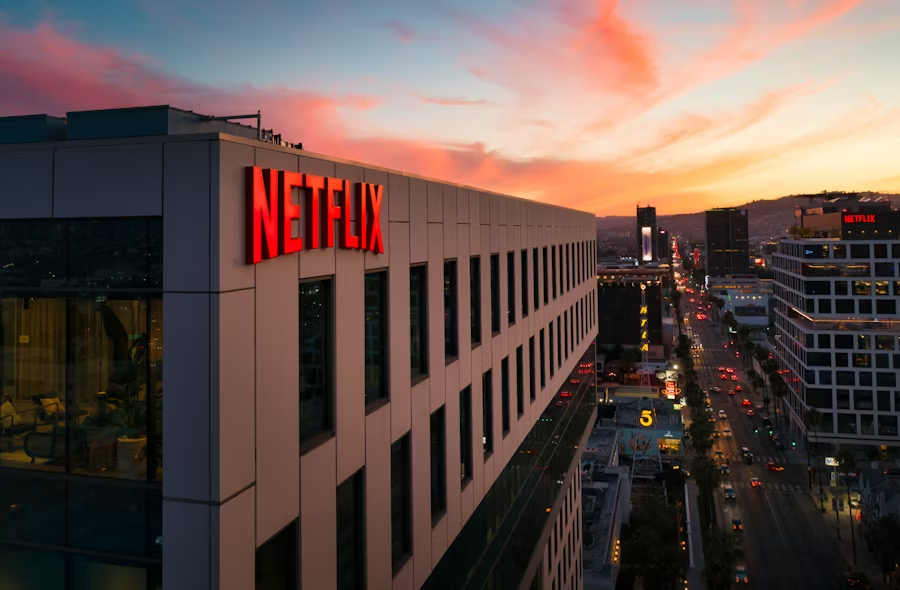
On December 5, 2025, Netflix, the world’s largest streaming platform, announced that they would be acquiring Warner Brothers Discovery, for $82.7 billion. The news sent shockwaves through the entertainment industry, with many wondering what it meant for the entertainment industry. Three days after Netflix’s announcement, Paramount Skydance Corporation made a hostile bid to acquire Warner Brothers Discovery for $108.4 billion.
If the Netflix bid is accepted by Warner Brothers, then Netflix and Warner Brothers would combine. This means that Netflix would acquire control over Warner Brother Discovery’s extremely valuable franchises, such as Harry Potter, Looney Tunes, and the DC Comics universe, among many other famous properties. These franchises would live on Netflix’s platform. Netflix would also have control over HBO Max, the television network and streaming service that hosts Warner Brothers, Discovery, and HBO’s content. While it is not clear whether subscribers of HBO Max would be grandfathered into Netflix’s subscription model, it is likely that Netflix would nonetheless gain some portion of HBO Max’s over one hundred and twenty million global subscribers as consumers flock to Netflix to watch HBO Max’s content. Of note is that through this merger, Netflix would only acquire Warner Brothers and HBO’s titles and not Discovery’s.
As of the time of this blog post (December 22, 2025), the shareholders of Warner Brothers have rejected Paramount Skydance Corporation’s hostile bid.
If Netflix is indeed successful in acquiring Warner Brothers Discovery it means less competition and variety in the market. Netflix owning Warner Brothers Discovery’s massive and historic collection of titles would eliminate one other player (Warner Brothers Discovery) from the entertainment providers market and make Netflix even more a behemoth compared to Disney and Amazon. Netflix already leads as the largest streaming platform, and a further acquisition of Warner Brothers Discovery’s enormous catalog might set off antitrust alarm bells.
This potential merger also provides Netflix an opportunity to become a studio powerhouse. However, Netflix is notoriously known for prioritizing streaming releases over theatrical releases. Most recently, Netflix’s movies Frankenstein and Wake Up Dead Man: A Knives Out Mystery were only available for big screen viewing for a few weeks before being exclusively placed on Netflix. For the vast majority of Netflix’s other releases, these films never see the inside of a movie theater and can only be accessed on the Netflix platform. This has left many movie-enthusiasts wondering if future Warner Brothers movies will have a theatrical release. Ted Sarandos, the current CEO of Netflix, has assured fans that Netflix expects to continue to release Warner Brothers movies in theaters, but only time will tell if that remains true.
For actors and creators who have deals with Netflix or Warner Brothers Discovery, this news may be confusing and concerning. While it is unlikely that the substance of an actor or creator’s work would be changed under a merger, those working with any of the aforementioned companies could begin to wonder what each scenario could mean. In the case of Netflix, an actor or creator may wonder whether their project would get a theatrical release. In the case of Warner Brothers, an actor or creator may wonder if their project will be carried over to Netflix or left behind.
All in all, the news of these bids has shaken the foundation of the entertainment industry. As more mergers occur and the industry shrinks itself into only a handful of massive corporations rather than multiple independent players, concerns rise over what the future of television and film will look like.
We continue to stay on top of the latest legal developments. If you find yourself in need of legal assistance in the areas of digital media, film, television, and/or intellectual property, or you have questions regarding how your business may be impacted by the merger, please contact our attorneys here.